
Memories from PGConf.dev 2026
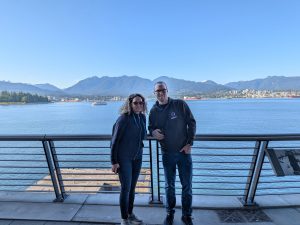
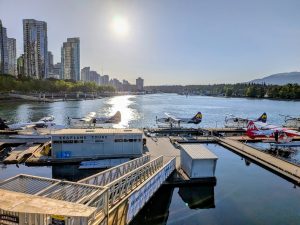
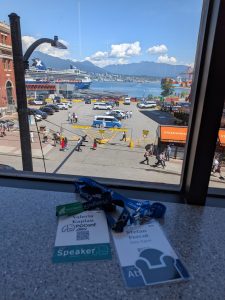
Thanks to the organising team, I had the chance to attend PGConf.dev last week in Vancouver, Canada. And luckily, I wasn’t alone there — Valeria could join as well!
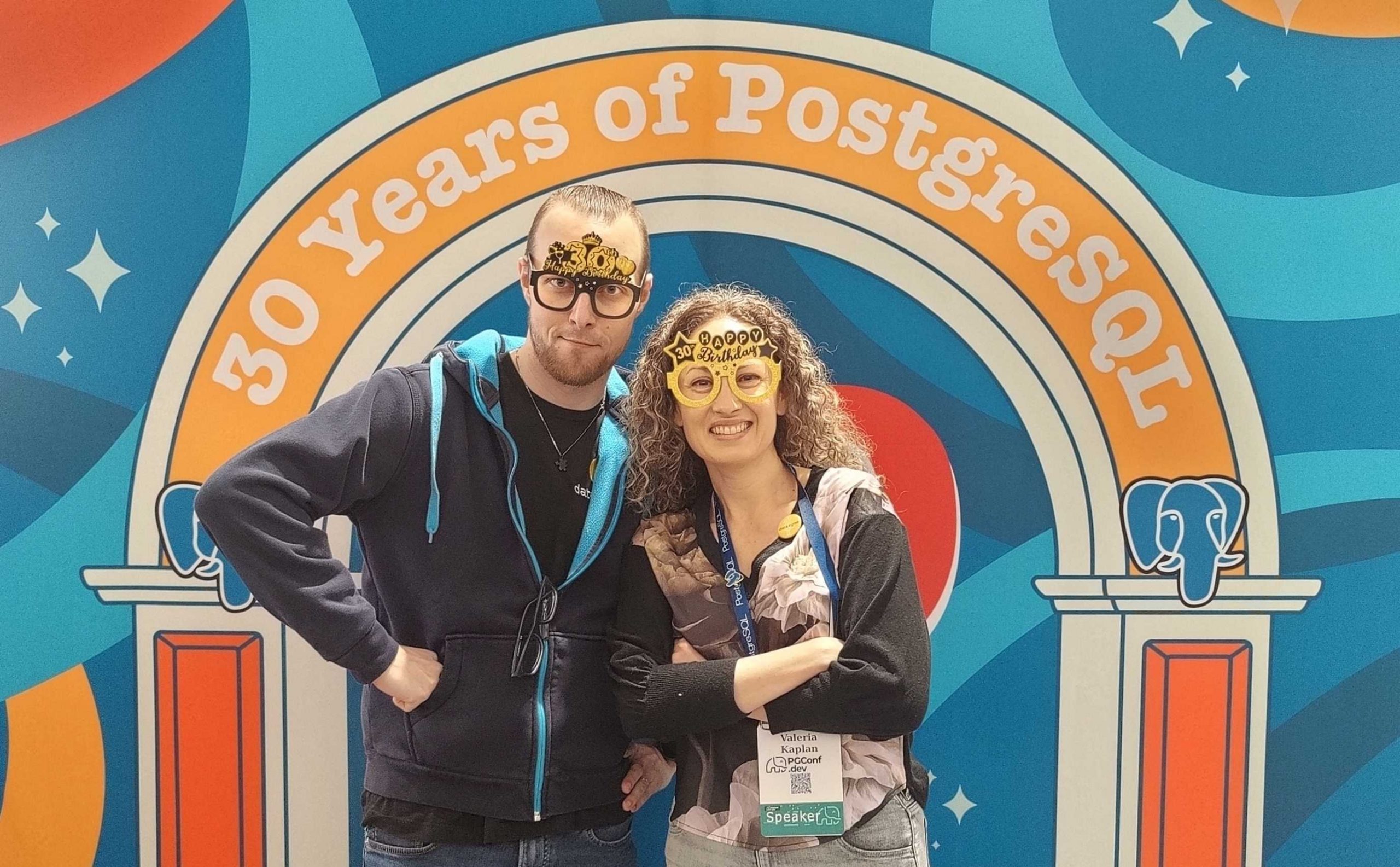
This year’s edition was particularly special: we celebrated 30 years of open source PostgreSQL together! Many activities revolved around the anniversary, including a special celebration-themed conference t-shirt, stickers, commemorative posters, and more.
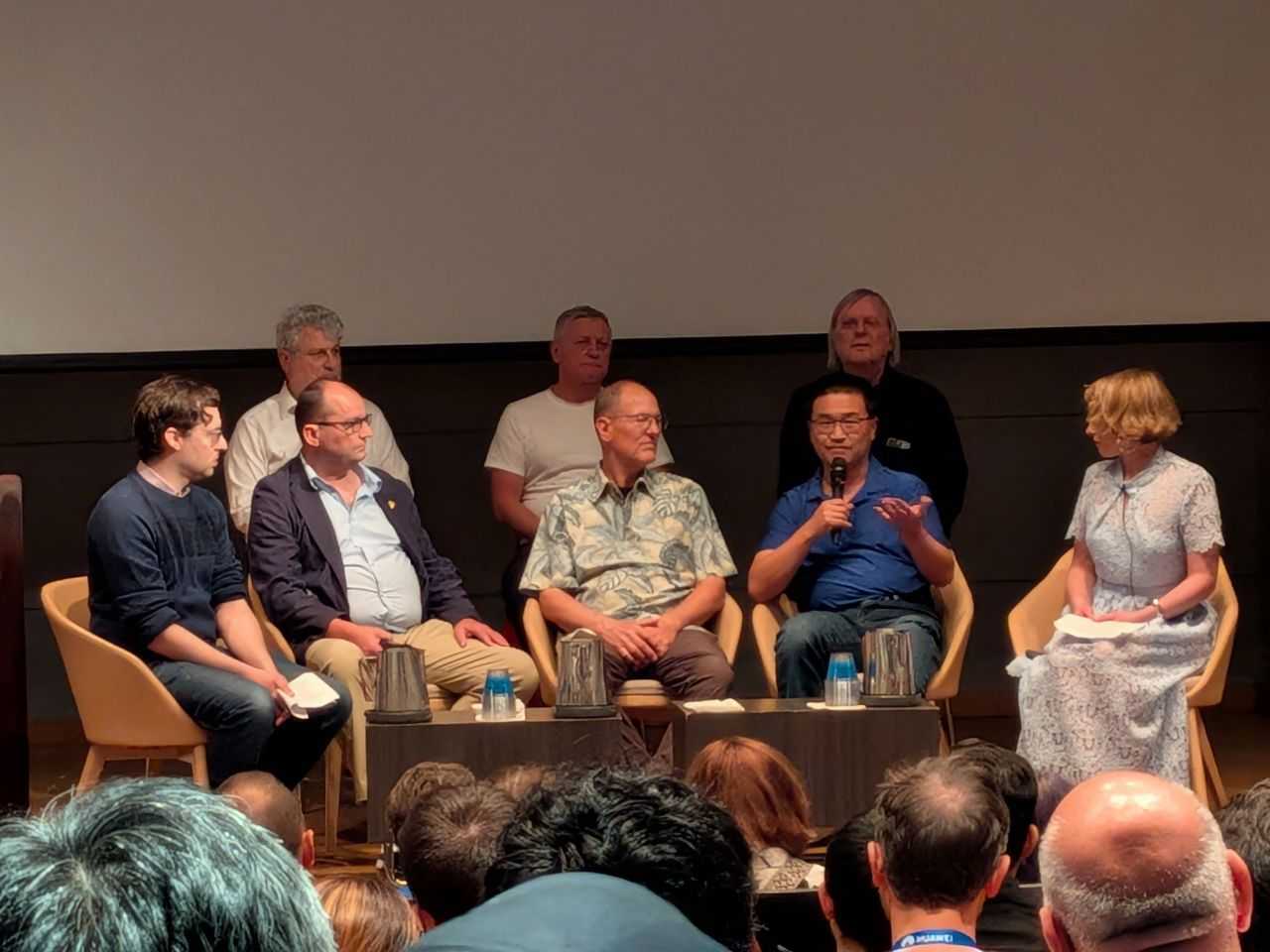
My personal highlight was definitely Wednesday’s round-table retrospective, which brought together project founders and early contributors to reflect on PostgreSQL’s formative years and its remarkable evolution. Featuring Bruce Momjian, Tom Lane, Thomas Lockhart, Jan Wieck, Vadim Mikheev, and Jolly Chen, the discussion revisited what the Postgres project was like in its earliest open source incarnation — technically, culturally, and socially.
Then, on Thursday, a birthday cake cutting ceremony took place following a short speech from Bruce Momjian.
Even though the project still relies on decisions made in its early days — such as hacker mailing-list-focused discussions and documentation written close to the source code using DocBook — it is hard to imagine where PostgreSQL will be 10 or 20 years from now.
Especially today, with AI-assisted content generation accelerating code writing (though not necessarily code review!), the project will inevitably evolve. But as Jan Wieck concluded during the panel, we should take care to preserve and foster the PostgreSQL spirit.
After the panel, a group photo was organised. I can’t wait to see the result!
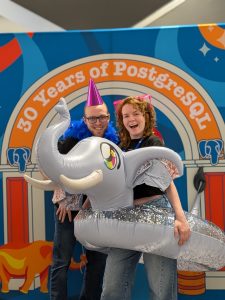
Speaking of pictures, a photo booth was set up to let attendees take funny pictures celebrating PostgreSQL’s 30th anniversary. As member of the PGDay Lowlands 2026 talk selection committee, I couldn’t resist taking a picture together with Floor Drees, who was the only representative from the organising team attending the event.
This year’s PGConf.dev schedule was divided into three parts.
Tuesday was focused on the broader community, with a main track full of interesting talks and panel discussions where newcomers could definitely learn a lot. Alongside the main track, more in-depth and specialised meetings — both public and private — were held in smaller rooms. This was probably my favourite part of the event.
Mark Wong and Robert Treat hosted a session about PostgreSQL Community Exhibitions, where they explained what PgUS and the PostgreSQL Funds Group are trying to organise to promote PostgreSQL representation at non-PostgreSQL events and exhibitions.
Currently focused mainly on North America, the primary goal of the volunteers involved is to grow the community rather than generate potential customers, which can make it difficult to get this work sponsored by employers. There is certainly room to expand this effort to Europe and other regions. Funding would help, but what is really missing right now is manpower.
So if you’re looking for opportunities to contribute and would be interested in helping with this effort, don’t hesitate to reach out to Mark or to the newly established PostgreSQL Advocacy Task Force at [email protected].
This topic echoed again during Friday’s unconference session about Postgres + Other Communities, led by Stacey Haysler, where we had interactive discussions about how not to remain isolated on our “Postgres Island”. Don’t hesitate to read the session summary Valeria and Stacey have put together on the wiki 😉
Then, I attended the session hosted by Alastair Turner and Zsolt Parragi, which aimed at unifying TDE efforts. Interesting conversations took place with other hackers interested in the topic to determine what should be encrypted, whether encryption standards should be supported natively or made pluggable, and more.
Again, the discussion continued during a Friday unconference session. So let’s stay optimistic and keep our fingers crossed that this feature lands in core soon.
To keep our conferences and events as safe as possible for everyone, having a Code of Conduct written on the website is not enough. I decided to attend Floor Drees and Stacey Haysler’s session about their proposal for decentralising safety with a local Code of Conduct response team.
Several organising committees already use this approach, and I do hope to see it spread further in the near future.
Wednesday and Thursday were packed with very interesting talks. As usual, the hardest part was schedule conflict management: deciding which sessions to attend and which ones to miss 🙁
Fortunately, most talks were recorded and should be available for replay soon!
The organising team also provided a dedicated space for Community Office Hours during those two days. Together with Feike Steenbergen — a long-time pgBackRest user working at Tiger Data, one of the project’s newer sponsors — we decided to host pgBackRest Community Office Hours on Wednesday.
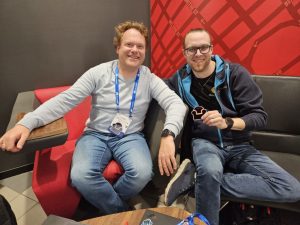
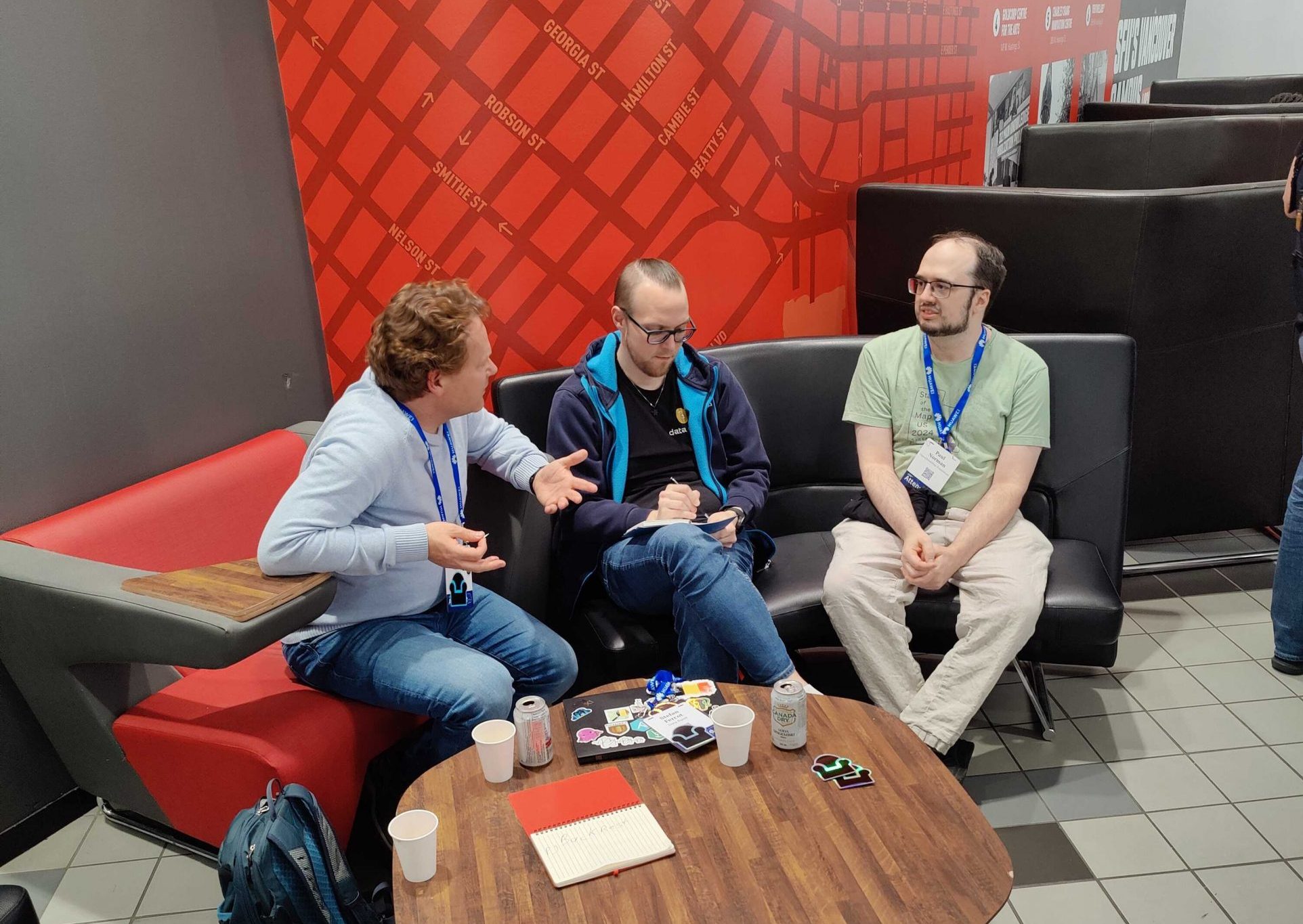
We had some great discussions there!
Friday was the traditional unconference day. I already mentioned two sessions above, but I also attended How to do HA with Physical Replication.
We had lengthy discussions about what should — or should not — be considered high availability. We explored what PostgreSQL might still be missing to make external tools such as Patroni easier to maintain or more powerful, and even debated whether an in-core orchestrator would make sense.
Although we should not confuse high availability with disaster recovery, we should probably document things better and help users navigate the trade-offs between maximum durability and maximum availability.
Two of the main challenges I took away from that session — and hope to see addressed in the future — are the difficulty of “demoting” a primary (bringing it down into read-only or standby mode to facilitate cluster-wide switchover operations), and the management of logical replication slots.
Speaking of logical replication, this topic came up again during the last round of unconference sessions!
The discussion was initiated by Hannu Krosing, who outlined what he believes is currently missing: full DML support without requiring primary keys, DDL replication, and more. Jonathan Katz tried to summarise the discussion by suggesting that things would probably become easier if we could delegate more control to the decoding plugin.
With Amit Kapila present to gather user feedback from the field, we also discussed fail-over for logical replication slots. Several ideas were raised to improve the current behaviour. Since logical decoding is already possible from a standby, it would be useful to synchronise slot state more easily across nodes in a cluster — whether between standbys or between a standby and a primary.
Finally, Amit also raised the topic of large objects: should we deprecate them and provide users with a better migration path, or should we instead improve them?
As you can imagine, this was an awesome event to attend, with lots of incredibly deep technical discussions, while also being strongly focused on fostering and strengthening community bonds.
Thanks to everyone who helped organise the event, and to all attendees for the lovely conversations. Hope to see you all next year in Montreal, Canada!
This was definitely a tiring week, but we came back with many great memories 🙂